
Sayreville Previous Residents by Era
The record trail for previous residents changes with the age of the address. Start with the current tax or parcel identity, then work backward through recorded transfers. Add directory and census material when the question is who used the address, not merely which names appeared in a deed. Each source has a separate time range and purpose. A blank result may reflect a date cutoff, a spelling variation, a changing place label, or a record that must be requested in person rather than a break in the address history.
| Source | Years It Covers | Where Held | What It Shows |
|---|---|---|---|
| County Clerk online deeds | 1929-present | Middlesex Official Records | Recorded transfer parties, date, consideration, legal description, and document links. |
| County Clerk online mortgages | 1950-present | Middlesex Official Records | Financing parties, releases, and satisfactions. A mortgage does not establish occupancy. |
| County Clerk other instruments | 1958-present | Middlesex Official Records | Liens, easements, plats, and related documents, depending on document type. |
| Earlier deed books and microfilm | Before 1929; local series details require verification | Registry counter, older books or microfilm, and State Archives through 1900 | Grantor, grantee, and legal-description trail; image access varies. |
| Regional directories including Sayreville | 1901/02-1908, 1911/12-1919/20, 1921/22-1923/24, 1925/26-1928/29; stated gaps | City-directory reels and library/archive holdings | Dated address and household snapshots, not a complete list of everyone at an address. |
| Federal and New Jersey census | Federal 1790-1950; state series 1855-1915 with gaps | NARA, State Archives, FamilySearch, HeritageQuest, and partner access | Household composition, relationships, ages, occupations, and address context. |
| Sanborn maps and permits | Map leads 1904, 1910, 1920; permit history not stated | Library of Congress, library databases, Construction Department, FTG, or OPRA | Building and street context, plus dated work records. Neither is a complete occupant record. |
Use the deed trail first when a transfer date or legal identity is needed. Use a directory or census first when the task is to test who lived here before. Maps and permits can then test whether the street, structure, or number makes sense for the time.
Sayreville Previous Residents Start Here
Begin with the official NJ Property Explorer or MOD-IV parcel layer. It can be searched by address, county, municipality, block, and lot. A current parcel result may provide the situs, assessed name, mailing address, block and lot, property class, and tax information. The Sayreville assessor and the municipal tax list are the first verification route if a statewide owner field is blank or redacted. Daniel's Law can remove covered people from some hosted map and tax-download layers, so an empty owner field is not proof that the parcel has no record.
Keep the situs separate from the mailing address. The situs is the physical parcel. A mailing address is where tax correspondence goes, and it may be different. For a long trail, copy the block, lot, tax-map page, legal-description wording, and any deed reference found in the current record. Those identifiers travel farther back than a street number when a subdivision, map, or local label changed.
Tracing Sayreville Previous Residents
The Middlesex County Clerk's Land Records Search provides the core ownership sequence. Its party-name mode accepts names in last-name-first-name order without commas. Narrow a search with Town set to Sayreville, a deed document type, and a date range. The browser also supports lot and block, legal-description, instrument-number, and book-page approaches. County guidance advises spelling variants. Save each verified result's document number, recorded date, parties, consideration, block and lot, legal description, linked documents, and book or page reference before moving backward.
- Copy the current parcel's situs, assessed name, block and lot, legal description, tax-map page, and any deed reference.
- Find the current purchaser in the County Clerk index and limit the result to a Sayreville deed where possible.
- Read the transfer record for the seller, recording date, instrument number, and legal placement.
- Search that seller as a purchaser to locate the earlier transfer, then repeat the sequence.
- Use plats, easements, releases, tax-sale records, or mortgages only to explain a break. A mortgage is not a transfer of title.
- When the trail reaches the online cutoff, move to the Registry counter, written-copy route, State Archives microfilm, or FamilySearch digitization.
- Grantor and grantee
- The grantor is the party conveying an interest. The grantee is the party receiving it. In a backward deed search, the earlier seller becomes the next name to test.
- Chain of title
- The dated sequence of transfers that connects one recorded interest to an earlier one. It is built document by document, not inferred from a street number alone.
- Legal description
- The block, lot, map, metes-and-bounds, or other recorded land description. It can identify the parcel when street numbering or lot lines changed.
- Criss-cross directory
- An address-order directory section, if a volume includes one, used to test names associated with a street.
- Enumeration district
- A census geographic unit used to organize returns. It can help locate a household when address wording differs from a directory.
Sayreville Previous Residents Before 1929
The County Clerk states that online deed records begin January 1, 1929. Its current browser is the controlling stated cutoff, even though a county digitization announcement described work reaching some deeds from the 1950s back to 1923. Treat 1923 through 1928 as a transition to test in the portal and confirm with the Registry. For 1928 and earlier, the practical routes are the County Clerk counter, a written request for a copy, State Archives deed microfilm through 1900, and FamilySearch digitization of county deed books. The exact earliest Middlesex deed-book year was not located in the reviewed official material.
The New Jersey State Archives genealogy collections add the older layer. The Archives holds county deed microfilm through 1900, microfilm indexes that continue beyond 1900 in many series, selected county surrogate records through 1900, and statewide census and vital resources. Research is free by appointment, with walk-ins if space permits; copies and reprographics have charges. The County Clerk's index can be searched online, but document images can involve login or cart steps. A certified deed copy follows a separate written or counter route.
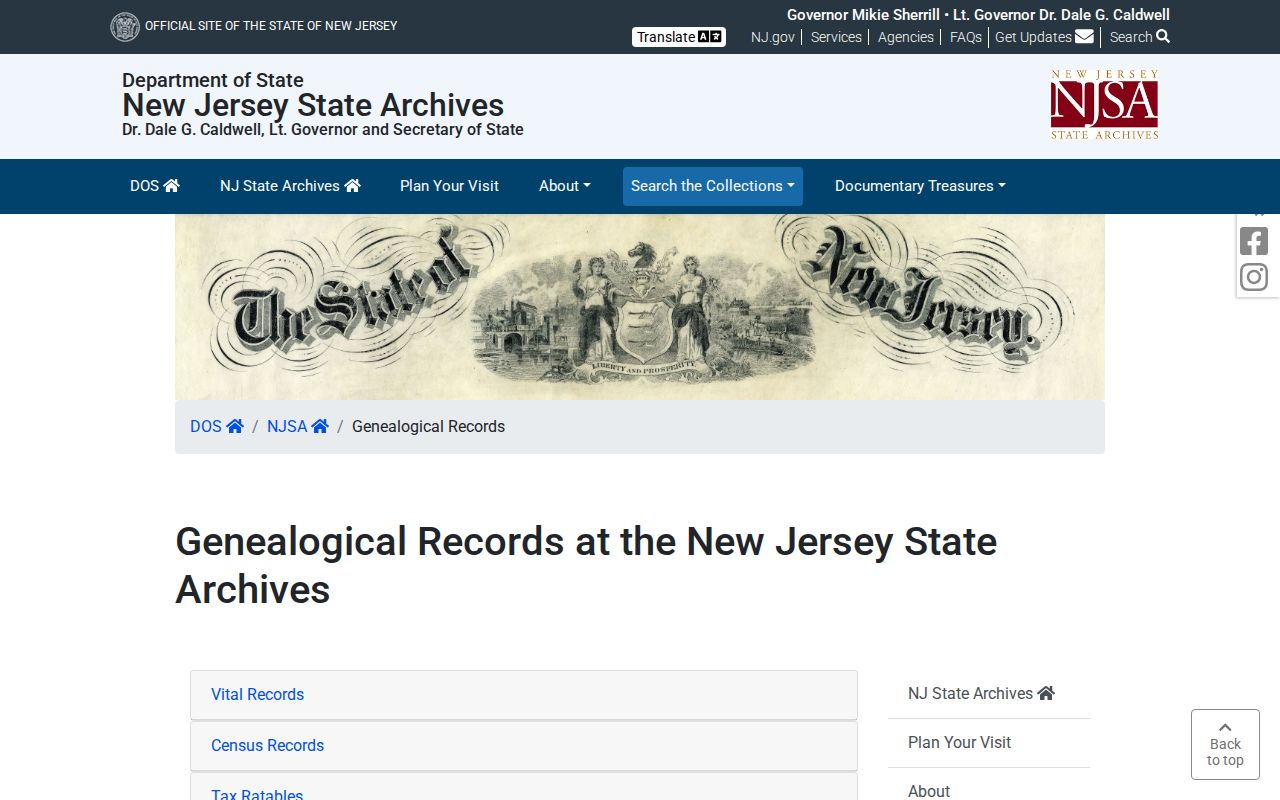
The Archives source supports a multi-record approach for past residents. It is not a promise that every historical record is online, indexed by address, or immediately available as an image. Record the repository and series whenever the online trail stops.
Sayreville Previous Residents in Directories
After the deed trail identifies a period, use a directory to look for a dated address snapshot. The New Brunswick regional runs that include Sayreville span 1901/02-1908, 1911/12-1919/20, 1921/22-1923/24, and 1925/26-1928/29, with documented gaps. The separate 1928 Sayreville title is a catalog lead that requires image or title-page verification through a library or account. Search Sayreville, Parlin, Morgan, Melrose, South Amboy, and South River because regional books may file the same area under different labels. The collection details and safe ways to read an entry are in the Sayreville city directory collections.
Do not treat an address listing as proof that every person was there. A directory is one printed snapshot with selection and coverage limits. Use it to generate a name, spelling, street form, or time window, then pair it with census, deed, newspaper, permit, or probate evidence.
Sayreville Previous Residents Census Pairing
Pair directory evidence with the closest released census rather than assuming a name in one source answers the household question. Federal schedules are publicly released through 1950 under the 72-year rule. New Jersey state census records exist for 1855, 1865, 1875, 1885, 1895, 1905, and 1915, although the series has gaps and exact Middlesex image availability varies. HeritageQuest is available through Sayreville Public Library for cardholders, while the State Archives, FamilySearch, and on-site research resources supply other channels.
- Copy the directory date, place label, exact street form, and every household notation that the actual printed key supports.
- Choose the nearest released federal or New Jersey state census and search the surname with spelling variants.
- Compare the household composition, age pattern, occupation wording, and neighborhood with the directory snapshot.
- Use the enumeration district, nearby households, and address context if the number is not written the same way.
- Mark contradictions and no-matches in the evidence log instead of changing a name or date to force agreement.
Sayreville neighborhood labels can cross postal and municipal wording. Parlin, Morgan, Melrose, Towne Lake, Sayre Woods, and Washington Village are useful search terms, while Morgan and Melrose can also carry a South Amboy mailing label. Preserve the source's own place name before reconciling it with a current map.
Sayreville Past Residents and Sanborn
Sanborn maps provide structure and street context for an address trail. Research leads identify Sayreville maps from 1904, 1910, and 1920. The Library of Congress confirms that the October 1920 map has nine sheets and public-domain images. Compare the building footprint, material, use, lot shape, and street name against a directory date and a current parcel record. That can help date the setting around an address. The map does not identify a resident.
No official dated Sayreville table for street renumbering or renamed streets was found. If a current number does not fit an old deed or directory, test the legal description, old and new block or lot, plat, Sanborn sheet, Borough ordinance, and dated permit. A number mismatch is a research gap to resolve, not a reason to attach two records without support.
Sayreville Previous Residents Permit Trail
Construction and code files can date work at a parcel. Sayreville Construction Department records can include an applicant or owner, project description, plans, fee, and inspection status, subject to redaction and availability. Current permit-status checking is through the FTG portal after account creation. For an earlier or address-specific file, use the office, its drop box, or an OPRA request that identifies the existing record by address, block and lot, date range, or permit number. The Department's historical online cutoff was not stated.
Use a permit as dating evidence. It can establish that work, inspection, or an application occurred, but it cannot prove that a person occupied the address. The same distinction applies to code files and tax bills. When an older structure is involved, a permit, a Sanborn sheet, and the legal description may clarify the property history more reliably together than any one record alone.
Sayreville Previous Residents Estate Links
A deed trail sometimes ends at an estate. The Middlesex Surrogate Office maintains a public-service index for wills, probate, guardianship, and estate records, updated every 24 hours subject to delay. The index is not the complete file. A request should identify the decedent, municipality or county, estate or docket number when known, record type, date range, copy choice, and delivery preference. The office's stated estate search fee is $10, with copies at $3 per page; confirm the current request form, identification, and proof-of-interest rules before mailing.
Obituaries and cemetery records can add a date or relationship that helps test a later transfer. Sayreville Public Library points researchers to regional newspaper digitization, NewsBank, and HeritageQuest, while the Historical Society and local cemeteries can help verify local leads. The Kler Reading Room offers appointments with genealogist assistance and on-site Ancestry access. These are separate access paths, not interchangeable proof of a recorded transfer.
Sayreville Previous Residents Lawful Use
Address history is best used for personal family research, local history, heir research, and civic curiosity. Respect access limits, redactions, and record-specific eligibility rules. An owner field, a deed party, or a historic address never proves every person associated with a place, and protected records should not be bypassed through another source.
Use records responsibly. Do not use past-resident information to pursue, monitor, harass, or harm a living person. Confirm important facts with the office that holds the record.